Temperatures dip as arctic air returns with squalling west winds
Ryan Harding, NTV Weather Centre
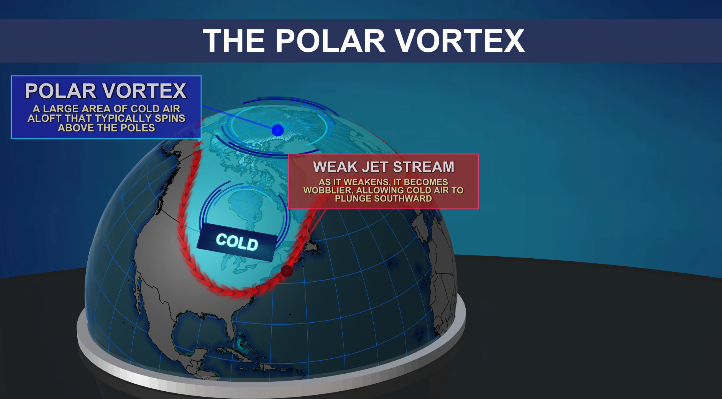
Once again this winter we’re seeing the affects of a polar vortex, where the jet streams that typically keep the arctic air further north loosen and allow for that colder temperature to be felt further south.
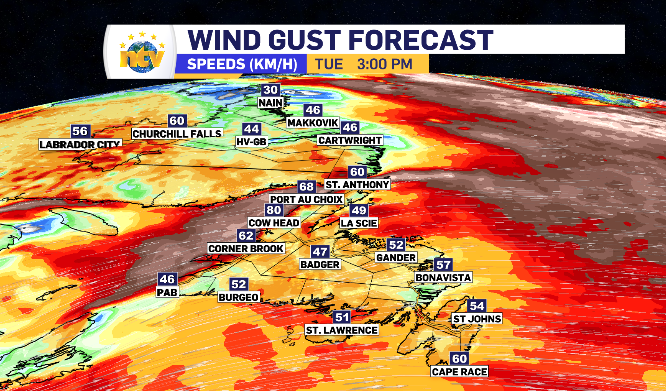
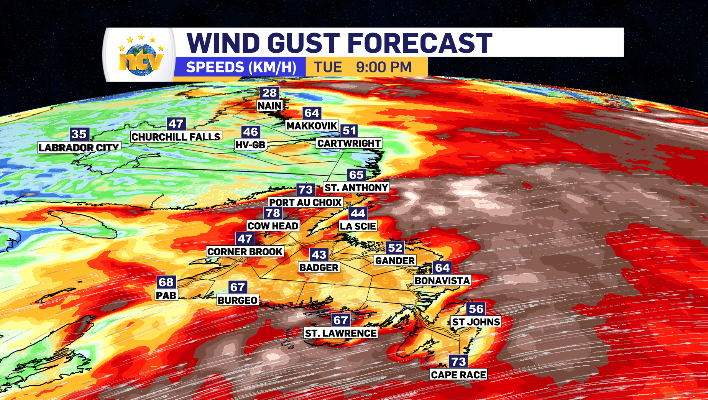
It just so happens that the cooler air west, and now south of us, arrives via the wind. Blowing, of course, west and southwest through Tuesday. That wind comes with a bit of a pace as well, topping in the high 70’s and low 80’s around the province’s coastlines specifically on the backend of Tuesday.
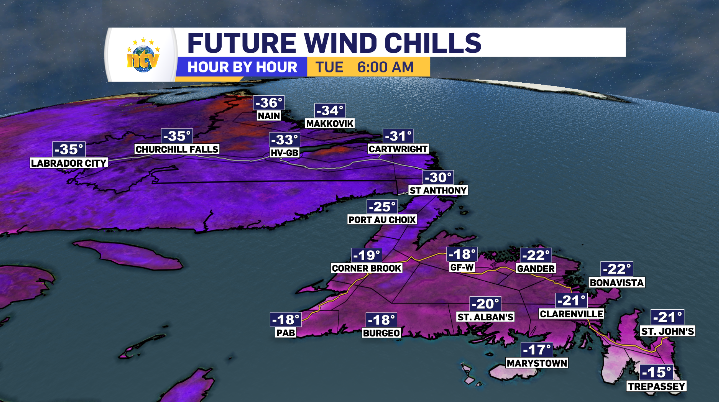
The first result of this wind is the windchill. With the wind off the water, Tuesday starts with the entire province feeling colder than any day in February.
Any time you have a cold front brought in by strong winds over the water, the elements are in place for snow squalls. Short bursts of blizzard-like conditions where it’s less about accumulation and more about periods of reduced visibility. That’s the second result of this wind and we actually see it take shape Monday evening, lasting through to Tuesday afternoon.

On the west coast, Saint David’s to Cow Head is under a snow squall alert with 4-8 cm expected and up to 15 cm possible depending on the squall’s duration. The Burin Peninsula through to Swift Current, down across Arnold’s Cove and into the Southern Avalon can expect a lighter 2-4 cm with 10 cm possible for some from the squalls. The time frame is forecasted for anywhere from 8 pm Monday evening to 2 pm Tuesday afternoon. Exact timing and location for snow squalls are tricky to pin point.


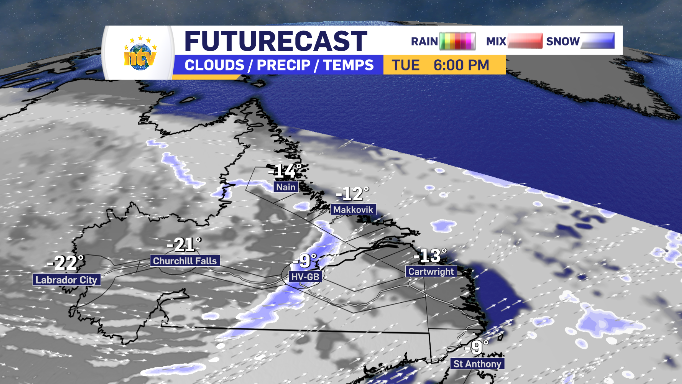
Outside of that, as shown in the futurecasts above, the rest of the island can anticipate a sunny, albeit chilly and windy, Tuesday.
Labrador is facing an equally chilly Tuesday, even when relativity and seasonal averages come into play. The day starts with sun for all. However, there is front of cloud with a band of flurries moving west to east, showing up in Labrador City early in the morning, reaching Happy Valley-Goose Bay by the supper hour and finishing the evening along the coastline. No community should see an accumulation of more than a centimetre or two.