


Old Churchill Falls deal is gone; Newfoundland and Labrador says it will finally be the primary beneficiary of its own power
It’s a deal decades in the making and now a reality.
Newfoundland and Labrador, Quebec and Ottawa have joined forces on a massive clean energy project that could, according to the federal government, reshape the future of this province and Canada’s energy landscape.
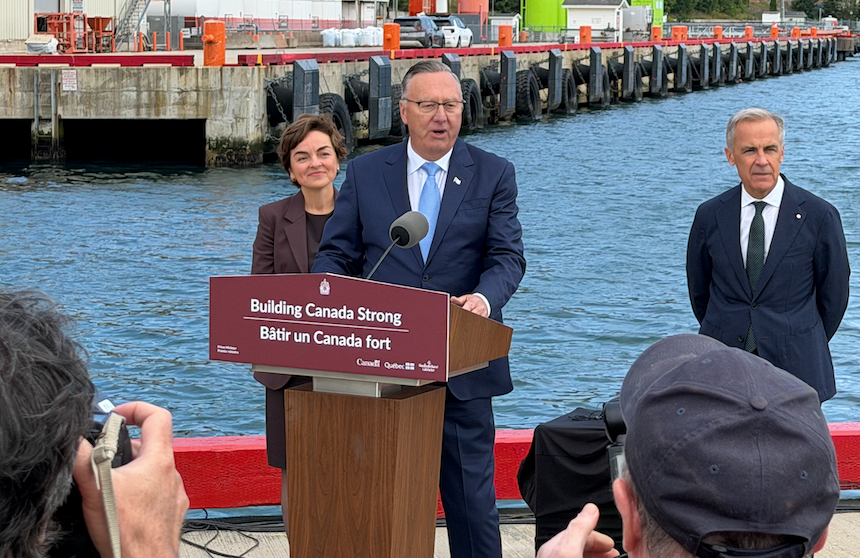
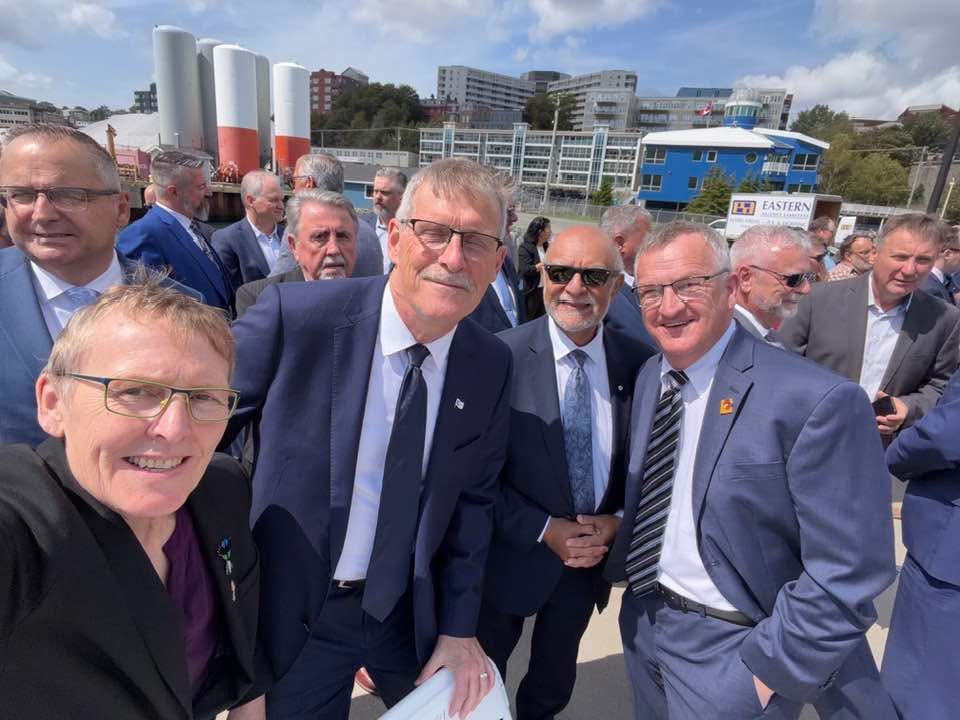
Prime Minister Mark Carney made the announcement in St. John’s this afternoon, alongside Newfoundland and Labrador Premier Tony Wakeham and Quebec Premier Christine Frechette.
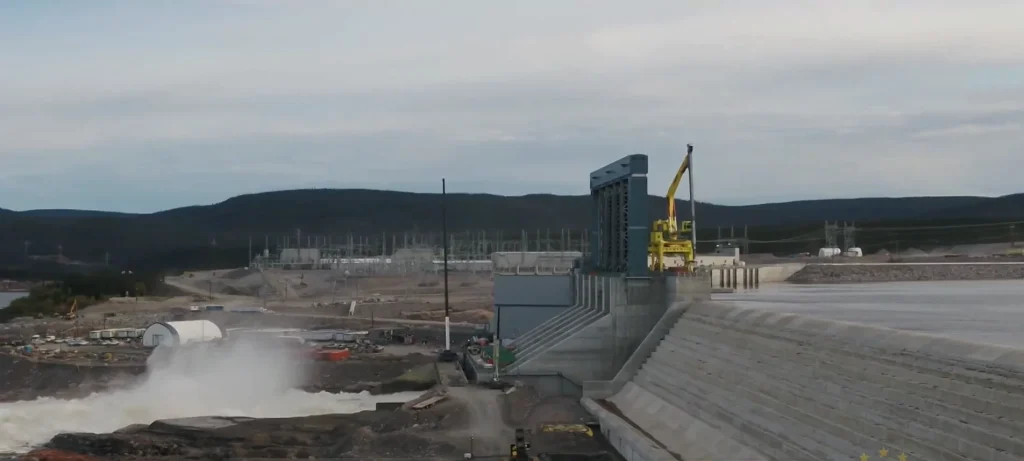
At the heart of the deal is Churchill Falls. The agreement will see the massive generating station upgraded and expanded, while also paving the way for the Gull Island hydroelectric project. Ottawa is committing upwards of $10 billion in financing to help get the projects moving, including new transmission infrastructure and opportunities for investment in major wind projects in Labrador.
“This is a win-win-win for Newfoundland and Labrador, the federal government, and Québec. I want to thank Prime Minister Carney and Premier Fréchette for their leadership throughout this process. We are finally replacing the notorious 1969 Churchill
Falls deal and the 2024 MOU with a new deal that will guarantee us more power, more
value, and more transmission,” says Wakeham.
Combined, today’s announcement can be equated to about $70 billion. The governments say it will create 14,000 megawatts of clean, renewable electricity, nearly tripling the current generating capacity of Churchill Falls.
The economic impact could be monumental with the projects expected to support over 20,000 jobs during construction.
For this province, the deal is about more than megawatts and billions of dollars. Wakeham says it’s about changing the relationship with Quebec over the power produced at Churchill Falls. Premier Wakeham says the agreement finally replaces what he calls the notorious 1969 Churchill Falls contract as well as the 2024 memorandum of understanding.
Wakeham says this province will get more power, more value and more transmission capacity – and how that power is used. The deal also puts a major spotlight on Labrador’s critical minerals.
“Newfoundlanders and Labradorians will finally be the primary beneficiary of our own resources, with complete control over whether we use our power to develop our economy or sell to outside markets,” Wakeham says. “Today is not about what
we can tear up, it’s about what we can build up. It is now time for us to roll up our sleeves and get to work to build a better and brighter future for all of us.”
Prime Minister Carney calls it cooperative federalism.
“Canada is extending its unique advantage in clean, reliable, and affordable power. Because when we master energy, we master our destiny,” PM Carney says. “Through cooperative federalism, we are unlocking our immense potential, building big, building sustainably, building in partnership, and building Canada strong for all.”
After decades of frustration over Churchill Falls, the province is now looking toward a future where its hydroelectric resources could fuel new development, new industries and new opportunities.
Summary of 2026 Agreement
- More value to the Province with deal value totaling$49B
- Largest clean energy investment in North American history, with $50+ billion capital spend in Newfoundland and Labrador on a suite of hydro, wind and transmission developments.
- Current agreement compared to the 2024 MOU increases the value to Newfoundland and Labrador from $36 billion (2024 NPV) to $49 billion (2026 NPV). In nominal dollars the value of the current deal is $273 billion.
- $3.5B (2026 NPV) in federal support for NL through financial support, investments and tax credits/equivalent supports.
- Higher effective price of 7.4 cents/kWh (2027) for Churchill Falls electricity sold to HQ.
- $10B in earlier cashflows to NL prior to 2041 under new contract.
- More power for NL- 2,350 MW vs 1,990 MW hydropower + additional 400 MW wind totaling 2,750 MW a
total increase of 760 MW. - Straight forward pricing model for Churchill Falls contract with built-in escalation and further price increases
if inflation is higher than expected. - Premium pricing option @ 150% for unused block of NL’s Churchill Falls base plant power. Newfoundland
and Labrador has gained optionality throughout the contract and can choose to use or export at premium
pricing/market prices. - More power and transmission before 2041 to serve Labrador mining and industry needs.
- Commitment to build Labrador West Transmission line with $1B (2026 NPV) federal support, investments, ITCs
or equivalent support. - Removal of 2% escalation and debt balloon at end of term for Gull Island.
- 985 MW transmission portfolio into the US markets.
- $3.9 Billion (2026 NPV) Gull Island option payment retained with CFX removed from current agreement.
- Securing more electricity supply from developments:
– Increasing generation from Gull Island- 2,700 MW with additional unit (vs 2,250 MW).
– Targeting 23.5% increase at Churchill Falls through upgrades to existing units (1,275 MW vs 550/10% MW in 2024). - New wind development. 2000 MW wind development to be developed via Independent Power Producer
with Canada taking up to 40% equity position. Newfoundland and Labrador to receive up to $1 billion (2026
NPV) in value from federal government. - Opportunity for Labrador Innu participation in new transmission and wind assets in Labrador.
- Feasibility study for Churchill Falls Expansion. Commercial arrangements not in place.
- Final agreements targeted completion 2026.
Negotiation Governance - Negotiation strategy approved by Government and Board of Newfoundland and
Labrador Hydro. Strategy focused on more power, more value, and more
transmission. - Board apprised of negotiations by negotiating team throughout.
- Churchill River Oversight Committee met with negotiating team frequently to assess
concurrence with mandate
Quick Facts
- Today’s agreement is the largest clean energy investment in North American history, nearly tripling the current generating capacity of Churchill Falls. Together, these projects will deliver 14,000 megawatts of clean, renewable power,
support 23,000 jobs in the construction phase alone, and contribute $31 billion to Canada’s GDP through the early 2040s. - The agreement advances: Canada’s National Electricity Strategy, which aims to double the capacity of our grid by 2050 and supply clean, reliable, affordable power across the country for decades to come.
- The Atlantic Energy Strategy, which was referred to the Major Projects Office in the fall of 2025. The Strategy focuses on developing renewable and non-emitting energy across Atlantic Canada – onshore and offshore wind, nuclear, and hydro – to meet rapidly growing demand across Eastern and Atlantic Canada and beyond.
- Today’s investments strengthen the interprovincial grid and the export infrastructure that carry clean, affordable power and Canadian resources to markets at home and abroad.
- The Labrador Trough is a world-class mining region stretching across Labrador and Québec. With significant sources of high-purity iron ore, it is a strategic asset for decarbonising global steel supply chains, reinforcing Canada’s leadership in
both renewable energy and critical minerals, and giving Canada a significant competitive advantage in the transition to a cleaner economy. - Strategic, pre-development projects in the Labrador region will be supported through the First and Last Mile Fund (FLMF). The FLMF is backed by $1.5 billion in federal funding announced in Budget 2025. It supports infrastructure that unlocks new mines and moves Canada’s resources to customers at home and abroad. Recognising that most
critical minerals deposits and enabling infrastructure projects in Canada are located on Indigenous territories, the FLMF makes specific funding available to enable Indigenous leadership, engagement, and participation throughout the mining value chain. - On clean energy, Canada already leads from a position of strength: the lowest residential electricity costs in the G7, the second-lowest industrial electricity costs in the G7 and the OECD, and the second-highest share of clean electricity
generation in the G7. Today, approximately 80% of Canada’s electricity generation is non-emitting. - To build on that advantage, Canada’s new government is advancing strategic investments in the modernisation and expansion of the country’s electricity infrastructure, including: Major Clean Economy Investment Tax Credits for clean electricity, clean technology, and carbon capture, utilisation, and storage.
- Strategic financing through the Canada Infrastructure Bank (with a $20 billion clean energy target), the Canada Growth Fund, and the Indigenous Loan Guarantee Program (envelope doubled from $5 billion to $10 billion).
- A new Productivity Super-Deduction, enhanced tax incentives covering all new capital investment, which allows businesses to write off a larger share of the cost of these investments right away.